 Leaders of the current generation, having canceled the "end of history," are dragging the world into a semblance of a dispersed Third World War. And although geographically conflicts flare up in distant points from each other, the giant maelstrom of confrontation draws more and more countries into its vortex, and the powers claiming to divide the world are essentially waging proxy wars with each other.
Such a world requires explanations, and in Russia, the broad reading masses, in attempts to understand what is happening now on the global chessboard, whether the pieces are moving according to the rules, and what will happen tomorrow, have begun to turn to the works of the classics. But not domestic ones.
"Move the Knight!"
While Russian authorities are fighting against the mention in fiction of drugs recognized as narcotics, and removing from circulation works where non-traditional relationships, thoughts of suicide, and childlessness are tangentially mentioned (none of this can be found in the uplifting works of dystopians from among the representatives of the presidential administration), absolutely Americentric works have burst into the tops of book sales.
Replacing the Anglo-Saxon George Orwell, whose "1984" became an impeccable statement of where Russia ended up in 2022, came the works of Henry Kissinger, Zbigniew Brzezinski, and Samuel Huntington — inquisitive readers are trying to understand the world (dis)order and the prospects (if any) of the global structure. That is, they are thinking about the future, turning not to their homemade and sternly frowning bearded holy fools, but to the clean-shaven American "academics," who were involved, among other things, in preventing humanity from a nuclear catastrophe. And thus strive to look at civilizational issues more broadly than through the dim glass of the artificial concept of a "state-civilization." People are looking for an answer to the question of why civilizations "clash," and whether the catastrophe of 2022 was inevitable.
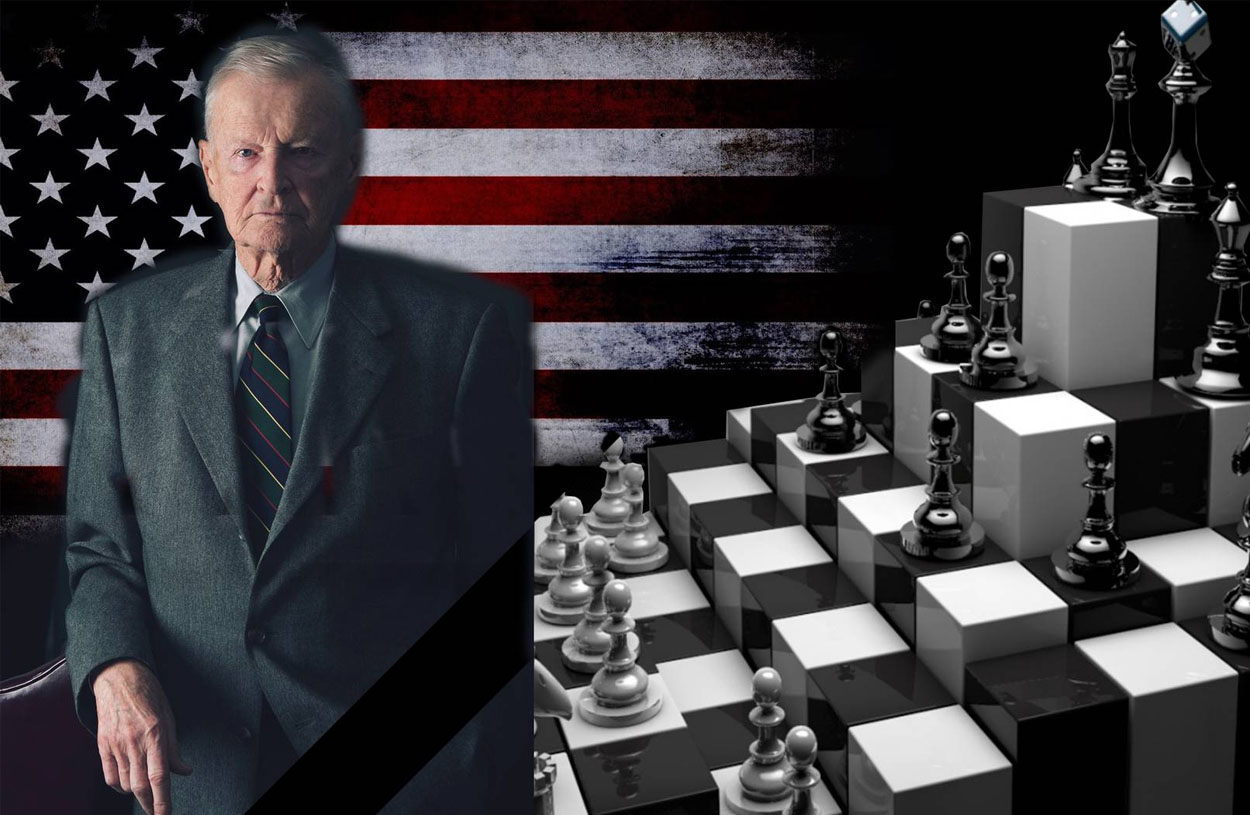
Zbigniew Brzezinski
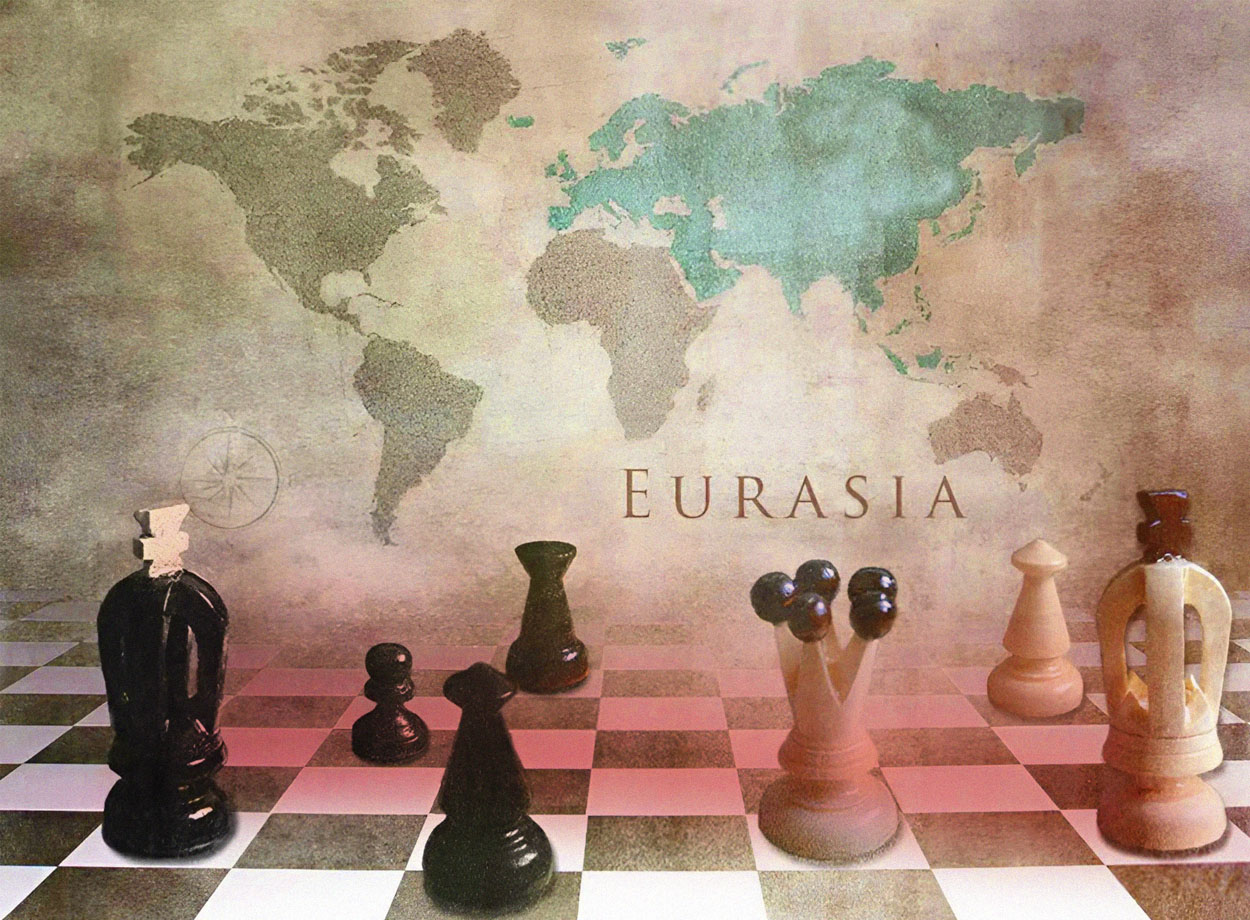
It is reported that in Russia, according to "Litres," at the beginning of the year, interest in books in the conditional section "political science" increased. The absolute leader in both the audio and text segments (first and second place in the ranking) is Kissinger's "World Order" — not his latest book, but it was published in the original in 2014, just when global disorder rose to its full height. "Bronze" went to Niccolò Machiavelli's "The Prince" — who would have thought that out of all the Italian Renaissance heritage, this treatise of the precursor of political technologies, who ended his days, like other political demiurges of our time, in disgrace, would be chosen. Next comes Zbigniew Brzezinski with his "The Grand Chessboard" — people are again interested in how someone moves on this very board with a "knight." Zbig (as he is called in American parlance) contains an explanation of Moscow's obsession with Ukraine: without it, the empire cannot be considered an empire. Such is the chess melancholy... Huntington closes the top list with "The Clash of Civilizations" — there are, of course, nuances, but the book, written about thirty years ago, is almost prophetic.
The old men Kissinger and Brzezinski are not just political thinkers, indeed quite large-scale ones, but also practical politicians who built their works based on the pragmatic task of maintaining the United States' leading role in the world order.
Back to the Westphalian System
The charm of Henry Kissinger lies not only in his image as a backstage puppeteer, manipulating presidents and entire nations. But also in the properties of the master's Realpolitik works, where there is not much water, but a lot of specifics and precisely historical explanations, and not at all in the spirit of our Kremlin historians — the national security adviser and secretary of state was successful as a diplomat and peacemaker because he did not lecture the opposite side of the negotiations on history. He did not tailor history to absurd ideological constructions, quite the opposite. But he also, without hesitation, interpreted the past and present from the perspective of the interests of the United States.
Kissinger often referred to the circumstances of the formation of the Westphalian system — there was something similar in them to the reasons for the formation of the post-war, 1945, world order: nations wanted to build a world without wars. The post-war model contained the pragmatism and arrogance of the great powers dividing the world, but also moral foundations — otherwise, the UN Charter and the Universal Declaration of Human Rights, in the work on which philosophers, for example, Jacques Maritain, participated, would not have been adopted. The Westphalian system, from Kissinger's point of view, is not so much a moral approach as a pragmatic one: after the Thirty Years' War, everyone wanted peace very much. The world community, in his view, until recently was a kind of global Westphalian system — with principles of non-interference in internal affairs, inviolability of borders, and unacceptability of interventions.
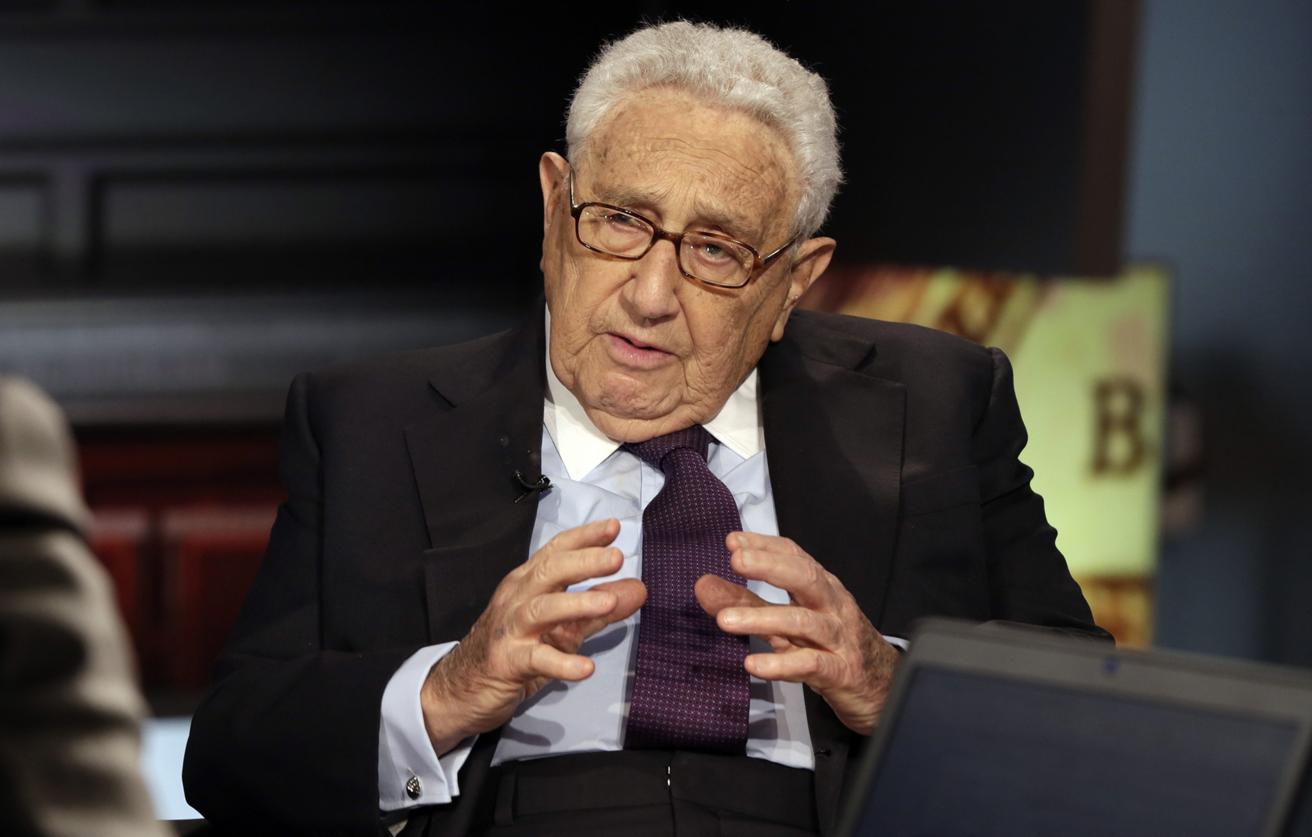
Henry Kissinger. Photo: AP Photo / Richard Drew
But — "any world order system, to be sustainable, must be perceived as fair — not only by leaders but also by citizens". And here came such leaders who impose their "order" in such a way that the global Westphalian system is collapsing. If they are concerned about the balance of power (it is never static, there are no eternal enemies, just as there are no permanent allies, Kissinger noted), then exclusively among themselves. The world — according to them — may be multipolar, but there are no more than three poles. Like in some joke: once an American, a Russian, and a Chinese met...
So it has been in history — both ancient and ultra-modern: everyone, Kissinger stated in the same book beloved by Russians, considers their order as unique and deserving of spreading to all humanity, while other peoples are considered insignificant barbarians.
Homeless Russia
Kissinger was not a supporter of NATO expansion. He feared exactly the same thing as another sage, George Kennan, — the incitement of anti-American and, more broadly, anti-Western sentiments in Russia, which had just begun to search for its identity (Brzezinski also understood the difficulties with this search). Kissinger in "World Order" defined Russia as a Eurasian power that had undergone a harsh "steppe school" and never felt at home in any part of the world, neither in Europe nor in Asia (this also resembles Kennan's ideas — even from his "long telegram" of 1946). Imperial expansionism invariably made more enemies for it, which did not contribute to the sought-after additional security. But it was always easier to go further than to stop.
There is also an explanation in the book for the future mutual caution and delicacy towards each other of Putin and Trump. Even Stalin felt capable of waging a local war, but was not ready to risk a direct war with the US — isn't that the same for Putin?
Kissinger recognized that the world order will now consist of many regional orders. But here's the problem: "The dominance of one country in the region by military means, even if it creates the impression of order, can create a crisis for the rest of the world." One of the conditions for possible détente, according to the experience of one of its architects, is the emergence of leaders striving for peace. Currently, there are simply no such leaders among the key players.
No matter how much Brzezinski claimed that the national "redefinition" of Russia, which began in the 1990s, is an act not of capitulation but of liberation, decades later a "redefinition" of a completely different nature occurred: the concept of defeat in the Cold War, for which revenge was needed, became in demand. Resentment defeated one of Zbig's basic theses, with which the Russian mass reader is belatedly becoming acquainted: "The only possible geostrategic choice for Russia is Europe." Imperial Russia can never be democratic — this assessment of his turned out to be accurate.
Huntington (by the way, a friend of Brzezinski) insisted on the existence of not so much an ideological as a cultural-civilizational division between nations. And even in the early 1990s, he predicted the insufficiency of superficial global Westernization and the corresponding risks of a reaction to it: "Somewhere in the Middle East, five or six young guys might well be wearing jeans, drinking cola, listening to rap, and between bows towards Mecca, crafting a bomb to blow up an American airliner." In 2001, that's exactly what happened...
You read, dear Russians, you read, your belated understanding will be credited to you. Or at least attempts at it. It should be taken into account that the book market, despite the state's super-serious attention to it, which does not feel confident without violence, including intellectual, over its subjects, is a small audience compared to the social network and television. There are relatively few readers of the books of creators and commentators of the world order. They do not set the tone. But the layer of thinking people, under all regimes and at all times, was not so large. Let it expand a little at least at the expense of Kissinger, Brzezinski, and Huntington. This is, at least, a scientific view of things. Which is important in a country where obscurantism penetrates the brain and body of the nation like a slow injection of poison.
* Andrey Kolesnikov is considered a "foreign agent" by the Ministry of Justice of the Russian Federation.
Photo: thenewglobalorder.com / Red Spring.